
How to Become an Art Director or Production Designer in India (2026)
Updated: July 2026 | By Virendra Rathore, Founder — JoinFilms Academy
Short answer: Becoming an art director or production designer in India starts with building a genuinely strong visual portfolio, gaining entry-level experience in an art department, and developing deep research skills around period, culture, and setting. This is a visual storytelling craft that requires working effectively within real budget and schedule constraints — success depends as much on practical problem-solving as on creative vision, built through years of hands-on production experience rather than academic study alone, and reinforced through consistently reliable delivery on every project.
What Do Art Directors and Production Designers Actually Do?
Art directors and production designers are responsible for the overall visual world of a film or show — sets, locations, props, and the broader aesthetic that establishes tone, time period, and place for the audience watching the finished work. This work happens well before shooting begins, through detailed research and design, and continues through active production to ensure the physical world matches the creative vision fully.
In Indian film and OTT production specifically, this role has grown significantly in importance as period pieces, regional-specific stories, and visually distinctive OTT content have increased demand for genuinely skilled production design, with audiences and platforms increasingly rewarding visual specificity over generic backdrop settings.
Art Director vs Production Designer — Key Differences
On smaller productions, particularly in India, these roles sometimes merge into a single position, while larger productions maintain a clearer, more formalized hierarchy between the two distinct roles.
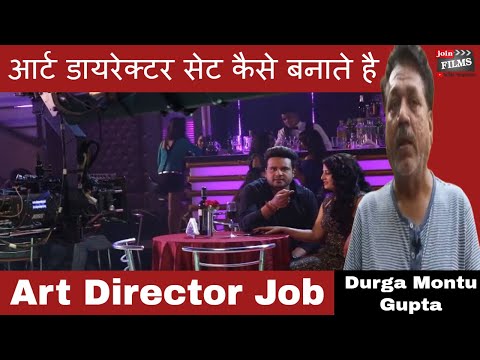
Watch: How to Become an Art Director in Bollywood
JoinFilms breaks down the realistic path to becoming an art director in the Indian film industry:
6 Steps to Become an Art Director or Production Designer
1
Build a Genuinely Strong Portfolio of Visual Work
Whether from art school, freelance design projects, or personal creative work, a compelling portfolio demonstrating spatial and visual thinking is the first thing anyone hiring for art department roles will actually evaluate before anything else.
2
Start in the Art Department at an Entry Level
Almost no one begins as a full art director. Working as an art department runner, assistant, or set dresser provides the practical, on-set experience that no design education alone can genuinely replicate.
3
Develop Genuine Understanding of Period, Culture, and Context
Much of production design work involves accurately representing a specific time period, location, or cultural setting. Building genuine research skills and visual knowledge across different eras and contexts is essential craft, not optional background reading, and directly determines whether a finished set feels authentic or merely decorative.
4
Learn to Work Within Real Budget and Time Constraints
Creative vision matters, but production design is fundamentally a practical craft — delivering a specific visual world within an actual budget and a fixed shooting schedule, which requires genuine problem-solving under real, often significant constraints.
5
Build Relationships With Directors and Cinematographers
Production design succeeds through close collaboration with a director's vision and a cinematographer's technical needs. Building trust and clear communication with both is genuinely central to getting hired again for future projects.
6
Build a Reputation for Delivering Distinctive, Reliable Work
Directors and producers return to art directors and production designers whose previous work demonstrated both genuine visual distinctiveness and reliable execution within real production constraints — this reputation compounds meaningfully over a career and increasingly becomes the primary factor in landing more prestigious, higher-budget projects.
Skills Every Art Director Needs
- Visual and spatial thinking — genuinely understanding how a physical space communicates mood, character, and story to an audience without a single word of dialogue being spoken.
- Research discipline — accurately representing a specific period or cultural context requires deep, careful research beyond surface-level assumptions or convenient stereotypes.
- Budget and logistics management — sourcing materials, managing construction timelines, and delivering a specific look within real financial constraints without compromising the creative vision entirely.
- Collaborative communication — translating a director's sometimes abstract creative language into concrete visual and physical decisions that a construction crew can actually execute.
Watch: How to Become a Production Designer in Films
Boishali Sinha shares genuine insight into the production designer's role and career path, in conversation with Virendra Rathore:
What Educational Background Helps
While no single required path exists, several backgrounds provide genuinely useful foundations for art direction and production design work:
- Fine arts, architecture, or interior design education — provides direct, transferable visual and spatial design skills relevant to production design work.
- Theatre set design experience — teaches the practical mechanics of building physical environments within real constraints, closely related to and directly transferable into film production design work.
- Self-taught visual artists — many successful art directors built genuine skill through independent creative practice and freelance design work rather than formal film education specifically, proving their capability through a strong portfolio rather than credentials alone.
Fraud warning: No legitimate production ever charges an aspiring art department worker money to join a crew or be considered for an art department role. Any such request, regardless of how it's framed or justified, should be treated as a serious warning sign of a scam operation.
Production Design Considerations Across Indian Cinema
India's regional and historical diversity creates specific production design challenges and opportunities that distinguish this work from more culturally homogeneous film industries:
- Period-accurate representation across vastly different eras and regions — a production set in Mughal-era North India requires entirely different research, materials, and visual language than one set in colonial-era Bengal or contemporary Kerala, and getting these details wrong is immediately noticeable to knowledgeable audiences.
- Regional cinema has distinct visual traditions. Tamil, Bengali, and Marathi cinema each carry their own established visual and design conventions that a production designer working across these industries needs to understand rather than defaulting to Bollywood-centric assumptions about color, architecture, and set dressing.
- Budget realities vary significantly by production scale. A major Bollywood production's art department budget may be many times larger than a regional independent film's, requiring production designers to develop genuinely different creative problem-solving approaches depending on the scale of resources actually available for any given project.
How Technology Is Changing Production Design
Digital tools have meaningfully changed how art directors and production designers plan and execute their work, and familiarity with these tools is increasingly expected:
- 3D visualization software allows production designers to present detailed digital mockups of sets before physical construction begins, reducing costly revisions later in the process.
- Virtual production and LED wall technology, increasingly used in larger Indian OTT and film productions, requires production designers to understand digital environment design alongside traditional physical set-building skills that have defined the craft for decades.
- Digital research resources have made accurate period and cultural research significantly more accessible than it was a generation ago, though this convenience makes the depth and accuracy of that research even more important, since audiences and critics can verify details just as easily and inaccuracies get called out publicly online more readily than before.
Building Filmmaking Understanding — JoinFilms Academy
Frequently Asked Questions
❓ How do I become an art director or production designer in India?
Build a genuinely strong visual portfolio, gain entry-level experience in an art department as a runner or assistant, develop deep research skills around period and cultural context, and build a reputation for delivering distinctive work within real budget and schedule constraints.
❓ What is the difference between an art director and a production designer?
A production designer oversees the overall visual concept and manages the entire art department's budget and staffing, while an art director manages the day-to-day execution of that vision, overseeing set construction and prop sourcing. On smaller productions these roles sometimes merge.
❓ Do I need an art or architecture degree to become an art director?
Not strictly required, but fine arts, architecture, or interior design education provides genuinely transferable skills. Many successful art directors also built skill through theatre set design or independent creative practice rather than formal film education specifically.
❓ What does an art director actually do on a film set?
An art director manages the art department's execution of the production designer's vision — overseeing set construction, prop sourcing, and ensuring the physical environment matches the creative and budgetary requirements of the production.
❓ How important is production design in Indian OTT content?
Increasingly important. Period pieces, regional-specific stories, and visually distinctive OTT content have significantly increased demand for genuinely skilled production design work across Indian film and television.
❓ How is technology changing production design in India?
3D visualization software allows designers to present digital mockups before construction begins, virtual production and LED wall technology is increasingly used in larger productions, and digital research resources have made accurate period research more accessible, though also raising the bar for accuracy since audiences can verify details easily.
About the Author — Virendra Rathore
Virendra Rathore is the Founder and Chief Mentor of JoinFilms Academy. A Dadasaheb Phalke Film Foundation Award winner (Best Acting Mentor), IMDb-credited filmmaker, TEDx speaker, and bestselling author of the "Switch On Switch Off Acting Method," he brings over 25 years of active experience across acting, direction, and film education. Creator of JoinFilms — one of India's largest acting and filmmaking education communities, with over 2.9 million YouTube subscribers.
IMDb profile.
Career Guidance: Get Free Bollywood Career Guidance →
Related: How to Become a Filmmaker in India · How to Become a Film Producer in India · How to Become an Assistant Director in India · How to Become a Casting Director in India · Best Online Filmmaking Workshop in Mumbai · JoinFilms on YouTube
 Launch your Graphy