
How to Become a Casting Director in India (2026)
Updated: July 2026 | By Virendra Rathore, Founder — JoinFilms Academy
Short answer: Becoming a casting director in India typically starts with working as an assistant to an established casting director, building a genuine eye for talent through exposure to large volumes of performance, and developing a deep, organized network of actors across types and experience levels. Many successful casting directors also bring some background in acting or production, which gives them practical insight into what directors actually need and what's realistically achievable on a shoot, rather than a purely administrative approach to the role.
What Does a Casting Director Actually Do?
A casting director's core job is matching the right actor to the right role — but the actual work involves far more than simply watching auditions. It includes interpreting a director's creative vision, understanding a production's budget and scheduling constraints, managing large volumes of submissions, running audition sessions, and negotiating between an actor's availability and a production's needs.
In India specifically, casting directors increasingly work across film, OTT, television, and advertising — each with somewhat different casting processes, timelines, and priorities that a working casting director needs to navigate fluently, often shifting between them within the same working week depending on which projects are active.
6 Steps to Become a Casting Director in India
1
Build a Genuine Eye for Talent
Casting directors need a trained ability to see potential in a performance that others might miss — this comes from watching enormous volumes of acting, both trained and untrained, and developing pattern recognition for what actually works on camera versus what merely looks impressive to an untrained eye.
2
Start as an Assistant to a Working Casting Director
Almost no one enters casting directly at a senior level. Working as an assistant — organizing submissions, coordinating auditions, managing schedules — is the standard entry point that builds both practical skills and genuine industry relationships over an extended period of consistent work.
3
Understand Acting and Production From the Inside
Many successful casting directors have some background in acting or production themselves, which gives them genuine insight into what a director needs from a performance and what's realistically achievable within a production's constraints and limited timeframe.
4
Build a Deep, Organized Talent Network
A casting director's real asset is their network — actors across different types, ages, and skill levels that they can call on for varying roles. Building and maintaining this network, including staying current on newer talent entering the industry, is ongoing, deliberate work that never really stops.
5
Develop Strong Communication With Directors and Producers
Successfully translating a director's sometimes abstract creative vision into concrete casting decisions requires genuine communication skill — asking the right clarifying questions and accurately interpreting what's actually being asked for, even when it isn't articulated with full clarity.
6
Build a Reputation for Reliability and Good Judgment
Casting directors are trusted with a genuinely important creative decision on any production. Directors and producers return to casting directors whose judgment they've learned to trust repeatedly — this reputation is built project by project over years, not established through a single successful casting choice alone.
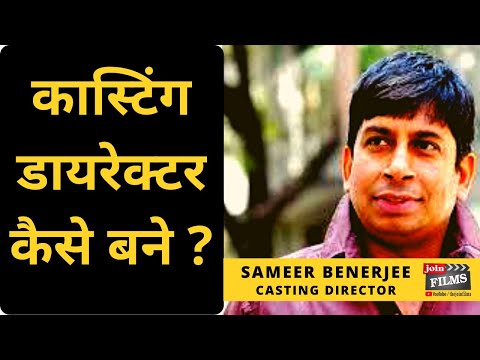
Watch: All About Casting Director
Sameer Benerjee explains what the casting director role actually involves and the realistic path into this career:
Skills Every Casting Director Needs
- Pattern recognition for talent — the ability to spot genuine acting potential quickly, often from limited material like a short self-tape or a brief in-person reading with little context.
- Organizational rigor — managing hundreds or thousands of submissions for a single production requires genuinely systematic tracking and evaluation processes handled consistently.
- Diplomatic communication — casting directors regularly deliver difficult news to actors and negotiate between competing priorities of directors, producers, and available talent pools across the full production timeline.
- Cultural and industry awareness — understanding what specific productions, genres, and platforms are actually looking for, which shifts meaningfully across film, OTT, television, and advertising work, and requires staying genuinely current rather than relying on outdated assumptions.
How Casting Directors Actually Select Actors
Understanding this process from the inside helps aspiring casting directors — and actors trying to work with them — understand what actually drives casting decisions:
- Character breakdown analysis — casting directors start by deeply understanding what the script and director actually need from a specific role, beyond the surface-level character description alone.
- Initial talent sourcing — pulling from existing networks, casting platforms, and sometimes open casting calls to build an initial pool of relevant candidates.
- First-round evaluation — reviewing self-tapes or headshots against the specific character requirements, filtering down to a genuinely manageable shortlist.
- Callback and chemistry testing — for significant roles, bringing shortlisted actors in for direct evaluation, sometimes testing chemistry with other cast members already firmly attached.
- Final recommendation to the director — presenting a curated shortlist with professional input, though the final creative decision typically rests with the director rather than the casting team.
Watch: How Casting Directors Cast for a Role
Himesh Chaudhary shares genuine insight into how casting directors approach selecting actors for specific roles:
What Casting Directors Earn in India
These figures vary significantly based on whether the work is for film, OTT, television, or advertising, and the specific reputation and track record of the individual casting director, with the most established names commanding significantly higher fees for major productions.
Fraud warning: No legitimate casting director ever charges actors money for consideration, auditions, or being added to their talent network. If someone claiming to be a casting director asks for payment, it is not a genuine casting relationship.
Casting requirements and priorities shift meaningfully depending on the medium a casting director specializes in:
Casting directors often specialize primarily in one or two of these mediums, since the evaluation criteria, industry relationships, and casting processes differ enough that deep expertise in one area is generally more valuable than shallow familiarity across all of them, particularly for actors seeking a casting director's genuine, informed judgment about their fit for a specific type of project.
Building Trust With Actors as a Casting Director
An often underappreciated aspect of casting work is that a casting director's effectiveness depends heavily on actors trusting them enough to bring their genuine best work to auditions, rather than a guarded, overly cautious performance.
Casting directors who build this trust over time — through fair treatment, honest communication about a role's requirements, and respectful handling of the audition process — tend to get noticeably stronger auditions from the actors they work with. This reputation among the actor community, separate from reputation among directors and producers, is a genuine professional asset that experienced casting directors deliberately cultivate throughout their careers, not simply a byproduct of doing the job correctly, and it directly translates into better casting outcomes for every production they subsequently work on.
Building Industry Understanding — JoinFilms Academy
Frequently Asked Questions
❓ How do I become a casting director in India?
Start by working as an assistant to an established casting director, build a genuine eye for talent through exposure to large volumes of performance, develop a deep organized network of actors, and build a reputation for reliability and good judgment across multiple productions.
❓ What does a casting director actually do?
A casting director interprets a director's creative vision, manages large volumes of actor submissions, runs audition sessions, and matches the right actor to each role within a production's budget and scheduling constraints.
❓ Do I need an acting background to become a casting director?
Not strictly required, but many successful casting directors have some background in acting or production, which gives them genuine practical insight into what directors need and what's realistically achievable on a shoot.
❓ How do casting directors select actors for roles?
The process typically includes character breakdown analysis, initial talent sourcing, first-round self-tape or headshot evaluation, callback and chemistry testing for significant roles, and a final curated recommendation to the director.
❓ How much do casting directors earn in India?
Casting assistants typically earn Rs 15,000 to Rs 35,000 per month, junior casting directors earn Rs 35,000 to Rs 80,000, and established casting directors can earn Rs 1,00,000 to over Rs 5,00,000 per project depending on production scale.
❓ Do casting directors specialize in specific mediums like film or OTT?
Yes, often. Casting requirements differ meaningfully between film, OTT, television, and advertising, and many casting directors develop deep expertise in one or two mediums rather than spreading themselves across all of them, since the evaluation criteria and industry relationships differ substantially.
About the Author — Virendra Rathore
Virendra Rathore is the Founder and Chief Mentor of JoinFilms Academy. A Dadasaheb Phalke Film Foundation Award winner (Best Acting Mentor), IMDb-credited filmmaker, TEDx speaker, and bestselling author of the "Switch On Switch Off Acting Method," he brings over 25 years of active experience across acting, direction, and film education. Creator of JoinFilms — one of India's largest acting and filmmaking education communities, with over 2.9 million YouTube subscribers.
IMDb profile.
Career Guidance: Get Free Bollywood Career Guidance →
Related: How to Become an Assistant Director in India · Casting Calls in India · How to Become an Actor in India · How to Crack a Bollywood Audition · How to Become a Filmmaker in India · JoinFilms on YouTube
 Launch your Graphy