
Junior Artist Career in India — A Complete Beginner's Guide (2026)
Updated: July 2026 | By Virendra Rathore, Founder — JoinFilms Academy
Short answer: A junior artist is a background performer in Indian film and TV productions — appearing in crowd scenes, street scenes, and background settings without dialogue. Junior artist work is a genuine, legitimate entry point into the industry, offering real on-set experience and modest daily payment, typically arranged through verified casting coordinators rather than direct production contact. It is not a guaranteed path to leading roles, but it provides authentic set exposure that genuinely benefits any actor's early development and understanding of the industry.
What Is a Junior Artist?
A junior artist — also called a background actor, extra, or supporting artist — appears in the background of a scene without speaking any lines: crowd scenes, street scenes, restaurant settings, wedding sequences, and similar contexts that need genuine human presence to feel authentic. Junior artists are essential to nearly every film, TV serial, and OTT production shot in India.
This role is distinct from a speaking supporting role or a lead role — junior artist work does not typically lead directly to bigger parts through some automatic progression, but it is a completely legitimate, paid form of on-camera work in its own right, and treating it with the same professionalism as any other job on set matters just as much here as anywhere else in the industry.
Why Junior Artist Work Is a Genuine Entry Point
- Real on-set exposure. Nothing teaches how an actual film or TV set operates — marks, continuity, crew hierarchy, shoot pacing — like being physically present on one, repeatedly, over multiple different productions.
- Immediate, if modest, income. Unlike auditioning for speaking roles, which can take months to lead to paid work, junior artist work offers same-day or short-notice paid opportunities right from the start.
- Industry visibility over time. Consistent, reliable junior artist work builds familiarity with casting coordinators and production teams, which occasionally leads to being considered for small speaking parts when they genuinely arise on a given production.
- Low barrier to entry. Junior artist work generally does not require extensive prior training or a polished portfolio, making it accessible to complete beginners exploring whether they want to pursue acting seriously before committing significant time or money to formal training.
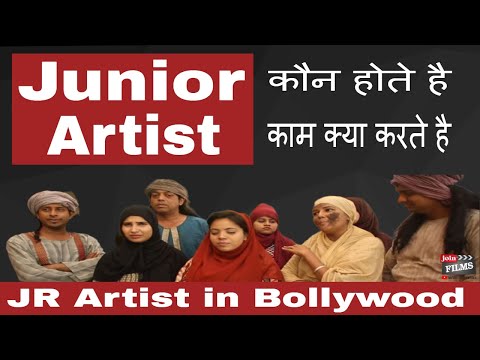
Watch: Who Are Junior Artists and What Do They Do?
JoinFilms breaks down exactly what junior artist work involves and how it fits into the broader Indian film industry:
How to Register as a Junior Artist in India
- Register with verified casting coordinators who specifically handle junior artist and background casting — these are distinct from casting directors who handle speaking roles, and often operate through dedicated WhatsApp groups or coordinator networks in production hubs like Mumbai.
- Create a simple profile with basic photos and physical details — height, age range, general look — since junior artist casting is often about visual fit for a scene rather than performance range.
- Stay flexible and responsive. Junior artist calls often come with short notice, sometimes just a day or two ahead, so being genuinely available and quick to respond significantly increases how often you actually get called for work.
- Build a reputation for reliability. Coordinators repeatedly call back junior artists who show up on time, follow instructions, and cause no issues on set — this reputation compounds into more consistent work over time, often more reliably than any other single factor in this line of work.
Junior Artist Income — Realistic Numbers
These figures vary by city, production budget, and how in-demand a specific look or age range is for a given shoot. Junior artist work is generally not a full-time sustainable income on its own, but it offers meaningful supplementary income alongside training and audition activity for speaking roles, and for students or those between other jobs, it can provide a genuinely useful additional income stream without requiring a major time commitment each week.
Fraud warning: Legitimate junior artist coordinators pay actors — they never ask actors to pay a "registration fee" or "coordinator fee" to be added to their calling list. Any request for upfront payment to access junior artist work is a scam that specifically targets eager newcomers.
Watch: First Shoot Day Experience
A genuine look at what a first day on an actual film set feels like — relevant context for anyone considering junior artist or early on-set work:
What to Expect on Your First Day as a Junior Artist
- Significant waiting time. Junior artist work involves considerably more waiting between setups than active on-camera time — patience is a genuine practical requirement.
- Simple, clear instructions. Assistant directors typically give straightforward direction — where to stand, what general action to perform, when to move — rather than detailed acting notes or feedback.
- Bring your own basic wardrobe options if instructed, since productions often ask junior artists to bring a couple outfit choices matching a general description rather than fully providing costume.
- Professionalism matters as much as it does for lead actors. Punctuality, following instructions precisely, and not causing disruptions on set are exactly what determines whether you get called back for future opportunities by the same coordinator.
Junior Artist vs Speaking Roles — Key Differences
Is Junior Artist Work Worth It for Your Career?
The honest answer depends on what specifically you're trying to gain from it. Junior artist work is genuinely worth pursuing if your goal is:
- Understanding how a real set actually operates — the terminology, hierarchy, and pacing that no classroom can fully replicate.
- Supplementary income while you train and audition for speaking roles, rather than relying entirely on savings during an early career period.
- Building comfort around cameras and crew in a lower-pressure context than a scripted, evaluated audition.
It is less useful, and can even become counterproductive, if it consumes so much time that it displaces actual acting training and audition preparation — junior artist work should generally complement a focused acting development plan, not replace one entirely. Actors who treat it purely as a side activity while continuing to train and audition for speaking roles tend to progress fastest, since neither activity alone provides everything a developing actor genuinely needs.
Building Skills Beyond Junior Artist Work
Junior artist work provides valuable exposure, but it does not by itself develop the camera acting skills needed for speaking roles. Actors serious about progressing beyond background work benefit from combining junior artist experience with structured training:
Frequently Asked Questions
❓ What is a junior artist in the Indian film industry?
A junior artist is a background performer who appears in crowd scenes, street scenes, and background settings without speaking lines. Junior artists are essential to nearly every film, TV serial, and OTT production shot in India.
❓ How do I become a junior artist in India?
Register with verified casting coordinators who specifically handle junior artist and background casting, create a simple profile with basic photos and physical details, stay flexible for short-notice calls, and build a reputation for reliability by showing up on time and following instructions.
❓ How much do junior artists earn in India?
Junior artist daily payment typically ranges from Rs 500 to Rs 3,000 depending on the production type, city, and specific requirements, with regional TV serials generally paying less than larger feature film productions.
❓ Does junior artist work lead to speaking roles?
Not automatically, but consistent, reliable junior artist work builds familiarity with casting coordinators and production teams, which occasionally leads to consideration for small speaking parts. It should be combined with structured acting training for actors serious about progressing further.
❓ Is junior artist work a legitimate way to start an acting career in India?
Yes. It offers real on-set exposure, immediate paid work, and low barrier to entry, making it a genuine option for beginners exploring the industry, though it should not require any upfront payment to register.
❓ Should I do junior artist work or focus only on training for speaking roles?
Both together tend to work best. Junior artist work provides real set exposure and supplementary income, while structured training builds the camera acting skills needed for speaking roles. Treating junior artist work as a complement to training, rather than a replacement for it, produces the fastest overall progress.
About the Author — Virendra Rathore
Virendra Rathore is the Founder and Chief Mentor of JoinFilms Academy. A Dadasaheb Phalke Film Foundation Award winner (Best Acting Mentor), IMDb-credited filmmaker, TEDx speaker, and bestselling author of the "Switch On Switch Off Acting Method," he brings over 25 years of active experience across acting, direction, and film education. Creator of JoinFilms — one of India's largest acting education communities, with over 2.9 million YouTube subscribers.
IMDb profile.
Career Guidance: Get Free Bollywood Career Guidance →
Related: How to Become an Actor in India · How to Get Into Bollywood Without Connections · Casting Calls in India · Film Set Par Pehle Din Kya Karein · Common On-Camera Mistakes New Actors Make in India · JoinFilms on YouTube
 Launch your Graphy