
Accent Training for Actors — A Practical Guide (2026)
Updated: July 2026 | Written by Virendra Rathore, Founder — JoinFilms Academy
Short answer: Genuine accent training starts with studying one specific, real accent through authentic native recordings rather than attempting a generalized impression, then breaking down concrete sound and rhythm changes, practicing with simple text before full dialogue, and getting feedback from someone genuinely familiar with the target accent. For Indian actors, this skill matters especially for regional casting, character work across India's linguistic diversity, and building a flexible, neutral base accent that adapts easily across different roles and casting briefs.
Why Accent Work Matters for Indian Actors Specifically
India's linguistic diversity makes accent skill genuinely more relevant here than in many other film industries around the world. A single film or web series often features characters from different regions, each carrying distinct speech patterns that audiences immediately recognize as authentic or unconvincing. An actor who can only perform their own natural accent limits themselves to a narrower range of castable roles.
Beyond regional variety, accent work is also central to period pieces, characters from specific socioeconomic backgrounds, and increasingly, roles requiring convincing English delivery across different registers for OTT and international co-productions, where casting directors are specifically evaluating whether an actor can shift away from their own natural speech convincingly.
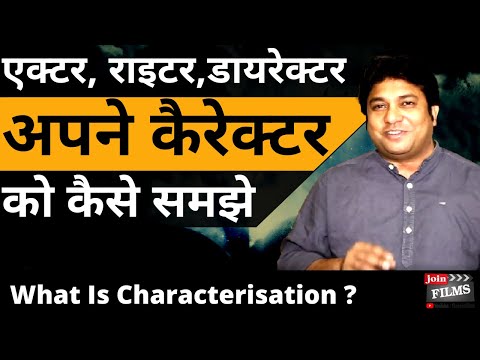
Watch: What Is Characterization?
Virendra Rathore explains characterization — the broader foundational skill that accent work is genuinely part of — and how understanding a character fully shapes every specific choice an actor makes, including voice and speech:
6 Steps to Build Genuine Accent Skill
1
Identify the Specific Accent, Not a General Impression
Vague attempts at 'a regional accent' or 'a Western accent' read as caricature. Genuine accent work starts with studying one specific, real accent — a particular region, community, or individual — rather than a generalized impression of it, which almost always sounds unconvincing to a native speaker.
2
Listen to Authentic Native Speakers Extensively
Recordings of real people speaking the target accent, not other actors imitating it, provide the most accurate reference material. Watching interviews, documentaries, or casual conversation footage builds a genuine ear for the specific rhythm and sound patterns involved.
3
Break Down Specific Sound Changes
Every accent involves specific, identifiable shifts — particular vowel sounds, consonant treatments, or stress patterns that differ from your natural speech. Identifying these concretely, rather than attempting a vague overall impression, produces far more convincing, precise results.
4
Practice With Simple Text Before Complex Dialogue
Reading straightforward sentences aloud in the target accent, before attempting actual scene dialogue, lets you focus purely on the accent mechanics without the added complexity of acting choices happening simultaneously.
5
Record Yourself and Compare to Reference Audio
Listening back to your own attempt against genuine reference recordings reveals gaps that are difficult to notice while speaking. This side-by-side comparison is often the fastest way to identify what still sounds inauthentic.
6
Get Feedback From Someone Familiar With the Accent
Wherever possible, having someone who genuinely speaks the target accent, or a trained dialect coach, listen and give specific feedback catches subtleties that self-assessment alone consistently misses, especially around rhythm and stress patterns.
Regional Accents Within India
India's internal linguistic diversity means "accent training" for Indian actors often means something quite specific — the ability to convincingly shift between regional speech patterns within Hindi and English:
- Regional Hindi variations — the way Hindi is spoken shifts noticeably across Uttar Pradesh, Bihar, Rajasthan, Madhya Pradesh, and Maharashtra, each carrying distinct rhythm and vocabulary choices that a genuinely versatile actor should be able to approximate convincingly for casting that specifically calls for a particular regional identity.
- Regional English variations — English spoken by someone from Delhi, Kolkata, Chennai, or Kerala carries genuinely distinct patterns shaped by the underlying regional language, and OTT casting increasingly seeks actors who can authentically represent these variations for characters from specific parts of the country.
- Urban versus rural speech patterns — beyond geography alone, socioeconomic and educational background shapes speech in ways that matter significantly for character authenticity, independent of regional origin, and this dimension is often overlooked by actors focused purely on geographic accent categories.
Building a Neutral, Flexible Base Accent
Alongside developing specific accent skills, many working actors also deliberately cultivate a clear, relatively neutral base accent — one without strong, immediately identifiable regional markers — that serves as flexible ground for roles not requiring a specific regional identity.
This neutral base isn't about erasing your natural voice entirely, but rather developing enough conscious control over your speech patterns that you can dial regional markers up or down deliberately, rather than defaulting unconsciously to habits you may not even be aware you have, especially under the pressure and adrenaline of an actual audition or shoot day.
Watch: Improving Dialogue Delivery
A practical, focused technique for improving overall dialogue delivery, which directly supports clearer, more controlled accent work:
Common Accent Mistakes New Actors Make
- Relying on stereotype rather than genuine study. Exaggerated, cartoonish versions of a regional accent, based on comedic imitation rather than authentic listening, read as offensive and unconvincing rather than skilled, and can genuinely damage an actor's professional reputation if noticed by casting professionals.
- Inconsistency across a performance. An accent that drifts in and out, especially under emotional intensity when concentration lapses, breaks believability more than a slightly imperfect but consistent accent would, since audiences notice the drift even when they can't articulate exactly what changed.
- Focusing only on vowel sounds. Genuine accent authenticity involves rhythm, stress patterns, and intonation just as much as individual sounds — actors who nail vowels but ignore rhythm often still sound noticeably off, even when each individual sound is technically correct in isolation.
- Practicing only with scripted material. Improvising freely in a target accent, beyond just rehearsed lines, tests and builds genuine command of the accent rather than memorized approximation, revealing whether the skill has genuinely transferred or is still tied to specific practiced phrases.
Building a Daily Accent Practice Routine
Consistency across a few weeks produces noticeably more genuine command than occasional longer sessions — accent work, like most vocal skill, responds to steady, repeated exposure rather than sporadic intensive practice crammed into a single weekend before an audition.
Playing an Accent Respectfully
Accent work involving a real community's speech pattern carries a genuine responsibility to represent it accurately rather than reduce it to caricature, particularly for accents historically used for comedic mockery in media.
The distinguishing line is usually specificity and respect: an actor who has genuinely studied a real accent, understands the community it belongs to, and portrays a specific, dimensional character tends to avoid the flattening effect of stereotype. An actor relying purely on a broad, exaggerated impression, disconnected from genuine study or respect for the people who actually speak that way, risks producing something that reads as mockery rather than skilled character work, regardless of intent — and this distinction genuinely matters both ethically and for the quality of the performance itself.
Building Vocal Flexibility — JoinFilms Academy
Frequently Asked Questions
❓ How do actors train for a specific accent?
Genuine accent training involves studying one specific real accent through authentic native recordings, breaking down concrete sound and rhythm changes, practicing with simple text before full dialogue, recording and comparing to reference audio, and getting feedback from someone genuinely familiar with the accent.
❓ Why is accent training especially important for Indian actors?
India's linguistic diversity means films and web series often feature characters from different regions with distinct speech patterns. An actor who can only perform their own natural accent limits themselves to a narrower range of castable roles.
❓ What is a neutral base accent and why does it matter?
A neutral base accent is a clear, relatively regionally unmarked way of speaking that serves as flexible ground for roles not requiring a specific regional identity. It gives actors conscious control to dial regional markers up or down deliberately.
❓ What are common mistakes actors make with accent work?
Relying on stereotype rather than genuine study, inconsistency across a performance, focusing only on vowel sounds while ignoring rhythm, and practicing only with scripted material rather than testing genuine command through improvisation.
❓ Do actors need a dialect coach to learn an accent?
A dialect coach isn't always necessary but is genuinely valuable, particularly for demanding roles. Feedback from someone familiar with the target accent, whether a coach or a native speaker, catches subtleties that self-assessment consistently misses.
❓ How can actors play an accent without stereotyping a community?
The distinguishing factor is genuine study and respect versus broad caricature. An actor who has studied a real accent authentically and portrays a specific, dimensional character tends to avoid the flattening effect of stereotype, unlike relying purely on an exaggerated impression disconnected from genuine understanding.
About the Author — Virendra Rathore
Virendra Rathore is the Founder and Chief Mentor of JoinFilms Academy. A Dadasaheb Phalke Film Foundation Award winner (Best Acting Mentor), IMDb-credited filmmaker, TEDx speaker, and bestselling author of the "Switch On Switch Off Acting Method," he brings over 25 years of active experience across acting, direction, and film education. Creator of JoinFilms — one of India's largest acting education communities, with over 2.9 million YouTube subscribers.
IMDb profile.
Career Guidance: Get Free Bollywood Career Guidance →
Related: Voice Modulation and Diction for Actors · Method Acting vs Meisner Technique · How to Become an Actor in India · Building an Acting Career in Regional Cinema · Monologue Practice Tips for Beginners · JoinFilms on YouTube
 Launch your Graphy